The jasmine tree stood quietly beside the straw roof, near the western corner.
It didn’t bloom every day, but when it did, its fragrance spread gently—soft enough to make the stench of famine feel ashamed.
The scent whispered,
“Even amid hunger, beauty survives. Gentleness endures.”
The year was 1974, the famine-ridden days of Bangladesh.
Monsoon was breathing its last.
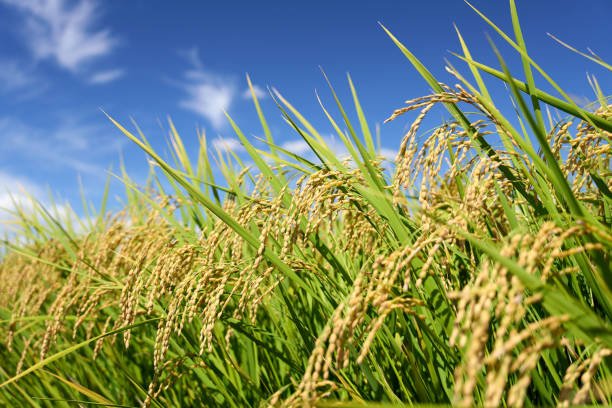
The paddy fields were submerged in water, just like the hunger etched on every face.
Rani was only eleven,
but her eyes had the weight of adulthood.
She had seen her little brother, Chonchol, wither away slowly for lack of rice,
and her mother lighting an empty stove with just water—pretending to cook, until dusk fell.
Once, her father was a schoolteacher.
But schools were closed, salaries stopped,
only hunger remained open—wide and endless.
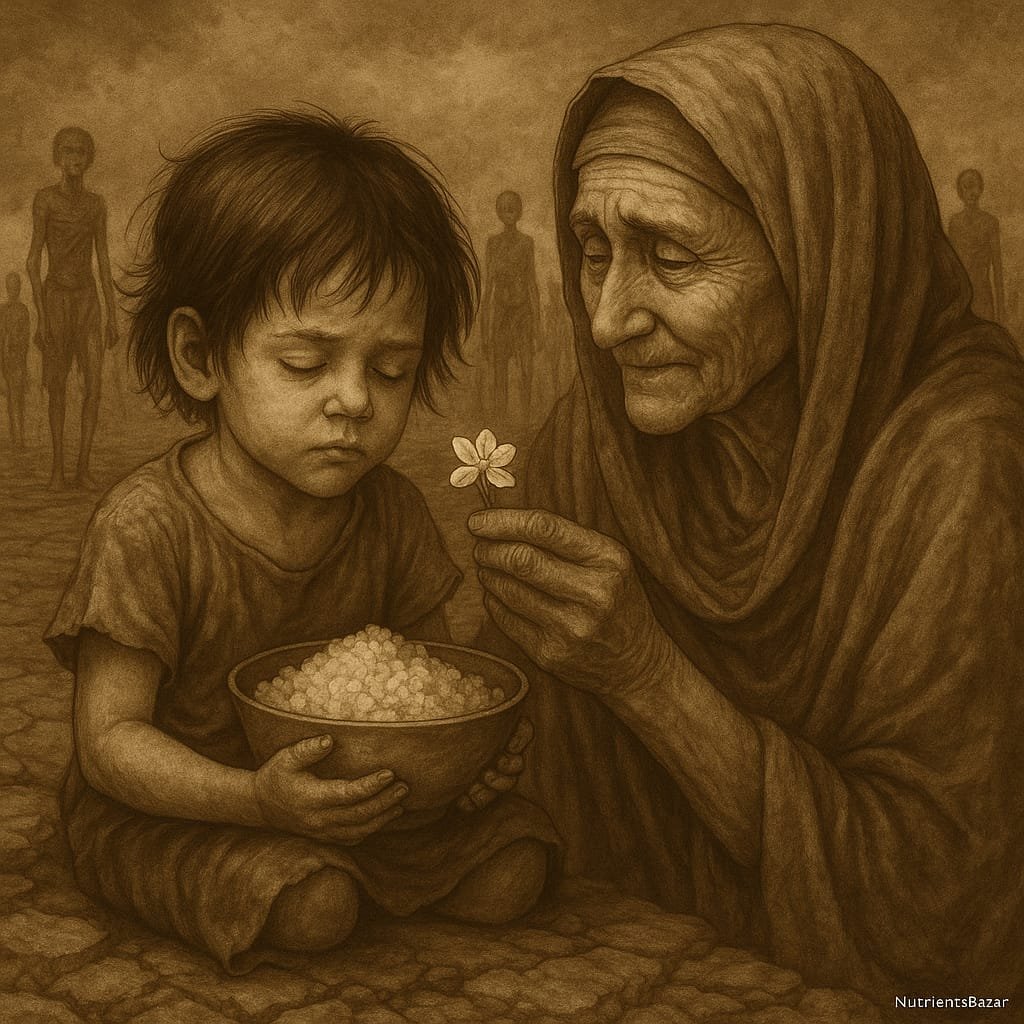
One afternoon, Rani sat beneath the jasmine tree.
Her stomach empty, lips pale—yet she clutched a small cloth pouch.
Inside were two rotten potatoes and a handful of rice grains, picked from a torn sack.
She was heading to the village market.
Why?
Because for three days, her mother had lain silently in the corner.
No words on her lips, no tears in her eyes—
only a quiet murmur now and then:
“If only I could have a little rice… I could die in peace.”
Rani knew—no one would trade rice for rotten potatoes and scraps.
Still, she would go.
Because hunger has no shame,
but people still have eyes.
At the corner of the market, Rani stood.
An old beggar noticed her.
He had a dry piece of bread in front of him.
He broke it in half and offered it to Rani.
She took it silently—
because she knew this wasn’t for her.
It was for her mother.
Suddenly, a man approached—middle-aged, from the city.
A camera around his neck, dried mud on his pants.
He asked,
— “Are you here to sell something?”
Rani held out her pouch.
The man looked puzzled.
— “What will you buy with this?”
— “Rice… just a little rice.”
The man offered her money.
She refused.
— “Rice. Not money.”
He said nothing.
He sat her down beside him.
Then, click.
A few photographs.
Rani didn’t understand.
The man said,
— “I’ll try to help you.”
Rani didn’t respond.
She just stared at the sky.
Clouds loomed, but rain wouldn’t come.
And somewhere inside, she wondered:
“Will this be another day without food?”
At the same time, in a newsroom in Dhaka…
A group of journalists sat around a table.
In their hands—photos of a little girl with sunken cheeks, a cloth bag in hand, and one desperate desire in her eyes:
rice.
The story spread.
The photos were printed in the papers.
An international aid group rushed to the village—
without being asked, they brought rice, lentils, blankets.
But Rani said nothing.
She only looked at the jasmine tree.
That’s where her brother Chonchol used to sit.
He would pick flowers and say,
— “See, sister? These flowers don’t know hunger…”
Rani plucked a jasmine bloom, held it to her chest,
and softly whispered,
— “You’d be happy today, Chonchol. Today, we have rice.”
Years later…
Rani attended school in the city.
Her photo appeared in textbooks.
Beneath it read:
“Through a child’s eyes, the famine of 1974.”
Teachers said in classrooms:
“This story reminds us—food is not politics.
It is a right. Even a jasmine tree can bear witness to that.”
In the end…
If someone asks:
What was the most beautiful thing during the famine of 1974?
Few would say rice, or lentils, or bread.
Maybe it was the jasmine flower,
held in a child’s hand—
its fragrance quietly whispering:
“Even in hunger, poetry survives.”